GPT-5.5 Codex appears to be grouping its reasoning steps in a way that hurts the quality of its code output, and 280 people on Hacker News noticed. If you rely on Codex for anything in your workflow right now, it is worth double-checking its recent output rather than assuming the newest version is the best version.
Sunday, July 5, 2026 · about a 2 minute read
When Better Models Make Worse Software
Today's stories keep bumping into the same quiet problem: the models are getting smarter, but the systems built around them are not always keeping up.
Get the calm version of AI news.
One email a day on what is actually happening in AI, in plain English. No hype, no doom.
Free. One calm email a day. No hype, no doom.
Armin found that newer Claude models sometimes call an editing tool incorrectly in ways older models did not, meaning a model upgrade quietly broke a working pipeline. This is a good reminder that when you update the model underneath a tool, you are not just getting improvements, you are also getting a slightly different personality that may not play well with the old instructions.
Simon Willison shipped a release candidate for sqlite-utils 4.0 with Claude doing most of the coding work, at a total cost of about $149. That is a real data point for anyone wondering what AI-assisted development actually costs on a meaningful open-source project, not a toy script.
A developer used OpenAI's Codex to help compress a world map into 445 bytes of ASCII art. It is a small, clever project, but it shows how AI assistance is showing up in places you would not expect, including the very tight, constrained puzzle-solving work that used to require years of low-level programming experience.
Get this every morning.
Here is the concept worth sitting with: a model and a tool are two different things, and upgrading one does not automatically fix the other. Think of it like your car and the roads it drives on. A faster engine is great, but if the road has new curves the car was not expecting, you slow down or crash. When developers build tools that talk to AI models, they write instructions assuming a certain model behavior. A newer model is like a new driver who learned slightly different habits. It may be smarter overall, but it does not automatically follow the old instructions the same way. That is why the stories today about degraded Codex performance and Claude breaking its own edit tool are connected. Better models and reliable tools are a package deal, and right now the industry is still figuring out how to keep them in sync.
A new tool called Mouse is trying to give AI coding more precise, surgical editing abilities rather than letting them rewrite whole files. If it works, it could reduce one of the most common frustrations with AI coding today, where the model fixes one thing and quietly breaks something else nearby.
That's today. See you tomorrow.
Get this every morning.
One email a day on what is actually happening in AI, in plain English. No hype, no doom.
Free. One calm email a day. No hype, no doom.

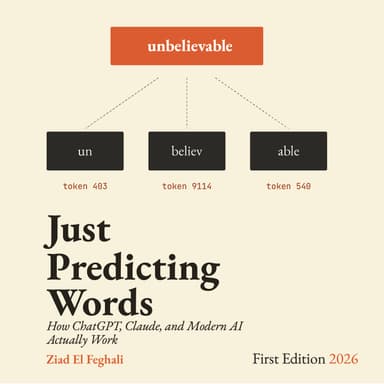
The book behind this newsletter
Just Predicting Words
How ChatGPT, Claude, and Modern AI Actually Work
The trick is small. The world it built is not.