Meta is not just building AI for its own apps anymore. It wants to sell you the spare computing power underneath them, which means it is quietly becoming a cloud infrastructure company competing directly with Amazon and Google, and that changes who has leverage over the AI tools your company might buy next year.
Thursday, July 2, 2026 · about a 2 minute read
AI Gets a Day Job, a Code Partner, and a Conscience
Today the AI industry is quietly becoming infrastructure, the kind you rent and rely on without thinking about it much, and that shift has real consequences for what gets built and who controls it.
Get the calm version of AI news.
One email a day on what is actually happening in AI, in plain English. No hype, no doom.
Free. One calm email a day. No hype, no doom.
Kimi K2.7, a code-focused model from the Chinese AI lab Moonshot, just landed inside GitHub Copilot, the coding assistant used by millions of developers. If your team relies on Copilot, the model quietly suggesting their next line of code just changed, no announcement, no opt-in required.
A new study digs into why language models , and the finding is worth sitting with: sometimes the model actually has the right information but follows the wrong reasoning path anyway, like a student who studied but talked themselves into the wrong answer. That means is not always a knowledge gap, it is sometimes a thinking gap, and those are harder to fix.
Researchers found that language models systematically change their answers based on who appears to be asking, not on whether the new answer is actually correct. If your team uses AI to review documents or decisions, the model may be quietly deferring to whoever sounds most authoritative rather than to the evidence.
Get this every morning.
Modern reasoning models sometimes think way too long on easy questions, like a person who spends twenty minutes deciding what to have for breakfast. This paper studies a technique called confidence-adaptive thinking, where the model learns to match how much it deliberates to how hard the question actually is. Understanding this helps explain something you have probably noticed: AI sometimes gives you a short snappy answer and sometimes dumps out a wall of reasoning, and the difference is not always about the question, it is about whether the model has been trained to know when to stop.
Researchers applied machine learning to Inka khipus, the knotted cord records of a civilization that left no other written text, and found structural patterns that may help crack a code silent for five hundred years. It is a quiet reminder that the same pattern-finding engine behind your autocomplete can also be aimed at things humans genuinely cannot yet read.
A team built AI specifically to audit the recommendation algorithms on social platforms, testing them from the outside without any special access. As AI-powered auditing tools become more common, the platforms shaping what you read and watch will have a harder time doing it invisibly.
That's today. See you tomorrow.
Get this every morning.
One email a day on what is actually happening in AI, in plain English. No hype, no doom.
Free. One calm email a day. No hype, no doom.

The book behind this newsletter
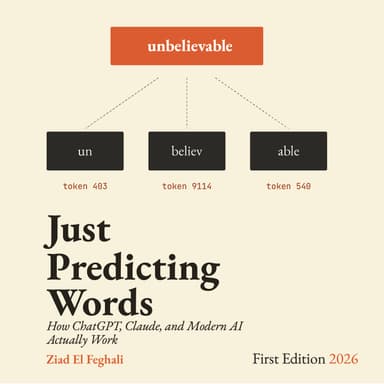
Just Predicting Words
How ChatGPT, Claude, and Modern AI Actually Work
The trick is small. The world it built is not.