DeepSeek's new V4 model can hold roughly a million words in its head at once, which means it could read an entire legal contract, a year of emails, or a full codebase in a single sitting. If this lands in tools you actually use, the days of having to carefully paste in 'just the relevant part' may be numbered.
Friday, June 19, 2026 · about a 2 minute read
AI Gets a Trim, a Tune-Up, and a Closer Look in the Mirror
Today's news is really about one question that keeps coming up: how do we know if these systems are actually working, and working fairly? From a massive new model to tools that catch their own blind spots, the theme is accountability.
Get the calm version of AI news.
One email a day on what is actually happening in AI, in plain English. No hype, no doom.
Free. One calm email a day. No hype, no doom.
Researchers found that when we use one AI to grade another AI's output, the grader agrees with itself pretty consistently but that consistency does not mean it is actually right, the same way a student who always writes the same wrong answer is consistent but still wrong. This matters because a lot of companies are quietly using this method to decide which AI products to ship.
A new tool maps out the hidden biases in language models by running the same prompt many times and watching how the answers drift, like spinning a roulette wheel a hundred times to see if it is rigged. If you use AI to draft anything that affects real people, this is the kind of auditing you would want someone to do before that tool reaches you.
A study of 70,000 customer support conversations found that measuring how a customer sounds (happy, frustrated) tells you almost nothing about whether their problem was actually solved. For any business using AI to handle support, this is a reminder that a chatbot can make someone feel heard while completely failing them.
Get this every morning.
Researchers found a way to make large models smaller and faster by cutting out the parts of the model that do not actually contribute to its reasoning, the way you might pack for a trip by pulling out everything you never actually wear. This is worth knowing because 'smaller and cheaper to run' is what gets AI from a research lab into the app on your phone.
A team trained a model to read messy court documents and pull out structured information about human smuggling networks, the kind of slow, expensive work that currently buries investigators in paperwork. It is a good example of AI doing genuinely useful, unglamorous work where the payoff is real.
The Anthropic and SK Telecom partnership is drawing scrutiny, and the details behind it matter for anyone thinking about how AI deals between big labs and big telecoms actually get structured. Who controls the model, who profits from it, and who is accountable when things go wrong are questions that do not have clean answers yet.
That's today. See you tomorrow.
Get this every morning.
One email a day on what is actually happening in AI, in plain English. No hype, no doom.
Free. One calm email a day. No hype, no doom.

The book behind this newsletter
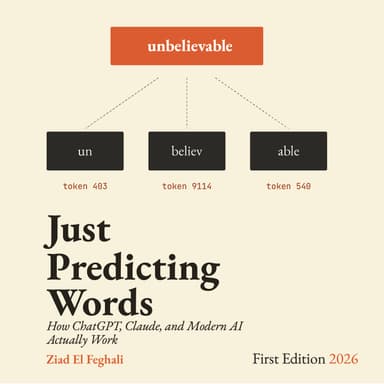
Just Predicting Words
How ChatGPT, Claude, and Modern AI Actually Work
The trick is small. The world it built is not.