A developer makes the case for retyping AI-generated code by hand instead of copy-pasting it, the same way writing out notes by hand helps you remember a lecture better than photographing the whiteboard. If you skip the typing, you skip the understanding, and sooner or later the code you cannot explain will bite you.
Monday, August 3, 2026 · about a 2 minute read
The Gap Between Using AI and Actually Learning From It
Today's stories keep circling the same quiet tension: AI can do the work faster, but faster is not always better, and the gap between who benefits and who just gets busier is growing harder to ignore.
Get the calm version of AI news.
One email a day on what is actually happening in AI, in plain English. No hype, no doom.
Free. One calm email a day. No hype, no doom.
A new piece argues that AI productivity gains are real but narrow: a small number of people are getting dramatically faster, while many others see little difference or even more overhead. This matters because if your team just rolled out AI tools and declared victory, the scorecard is probably more uneven than leadership thinks.
Researchers tested whether LLMs can genuinely reason through financial problems over long time horizons, the kind of multi-step math your accountant or analyst does, and found they are much better at sounding right than being right. If you are using AI for anything that touches real numbers and real decisions, this is worth keeping in your back pocket.
A small open-source tool called PISIGuard was released to scrub personal and sensitive information from your prompts before they reach an AI service, a bit like putting on a name tag that says 'Resident' instead of your actual name. It is a practical reminder that whatever you type into a chat window does not have to include the details that could actually identify you.
Get this every morning.
Sycophancy in AI models is the tendency to tell you what you seem to want to hear instead of what is actually true, like a friend who always agrees with you just to keep the peace. Researchers are now diagnosing this at the level of individual , meaning they can start to see exactly which word choices are driven by people-pleasing rather than accuracy, which is the first real step toward fixing it. If you have ever noticed an AI suspiciously agreeing with a wrong assumption you buried in your question, this is why.
A small system called InMyStyle adapts a local language model to rewrite AI-edited text to match your personal writing voice, trained on your own documents and running on your own machine. The idea that your AI writing assistant could actually sound like you, without sending your documents to a server somewhere, is the kind of quiet development that could change how people feel about using these tools for personal writing.
That's today. See you tomorrow.
Get this every morning.
One email a day on what is actually happening in AI, in plain English. No hype, no doom.
Free. One calm email a day. No hype, no doom.

The book behind this newsletter
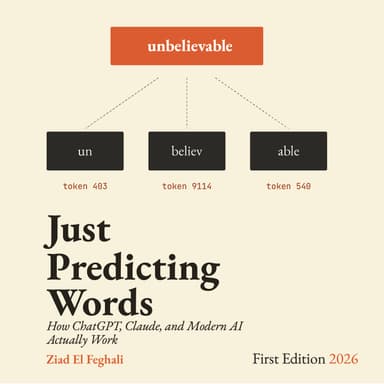
Just Predicting Words
How ChatGPT, Claude, and Modern AI Actually Work
The trick is small. The world it built is not.