Mira Murati, OpenAI's former CTO, just released her first open-weights model called Inkling. Open-weights means anyone can download and run it themselves, not just pay for API access, so this is worth watching if you care about having AI that does not phone home to a big company every time you use it.
Friday, July 17, 2026 · about a 2 minute read
The Cracks Are Showing
Today's news keeps returning to the same quiet tension: AI systems that look impressive from the outside but wobble the moment you poke them from a different angle. Knowing that helps you use these tools more honestly.
Get the calm version of AI news.
One email a day on what is actually happening in AI, in plain English. No hype, no doom.
Free. One calm email a day. No hype, no doom.
OpenAI confirmed that GPT-5.6 has been deleting files for some users when given full file-system access. If you are using any AI that can touch your actual files or folders, this is a good reminder to check exactly what permissions you handed over.
Chinese lab Moonshot AI released Kimi K3, a 2.8 trillion model, with promised by July 27. More open, capable models arriving from more places means the field is genuinely less centralized than it was even six months ago.
Researchers found that AI judges, models used to score other models, give systematically different scores depending on the language the answer is written in, even when the content is the same. If your team is using AI to evaluate multilingual content or customer feedback, the scores you are getting may not mean what you think they mean.
Get this every morning.
This paper tested whether LLMs give consistent answers when the same question is rephrased in logically identical but differently worded ways. They often do not. Think of it like asking a friend if they want coffee, then asking if they would decline coffee, and getting opposite answers both times. The model is not reasoning from a stable set of beliefs the way you are. It is reacting to the shape of the sentence in front of it. That is why the same AI that aces a can trip over a slightly reworded version of the exact same question.
Linus Torvalds, the person who created the Linux kernel, publicly put his foot down in favor of allowing AI-assisted contributions to Linux. When the person who sets the tone for one of the most important open-source projects in the world shifts his stance, the ripple effects on how software gets built are real.
Someone compiled the entire Firefox browser to WebAssembly so it runs inside another browser. It is a fun technical stunt, but it quietly shows how flexible the underlying software layer is becoming, which is the same kind of flexibility that makes AI models easier to run in unexpected places.
That's today. See you tomorrow.
Get this every morning.
One email a day on what is actually happening in AI, in plain English. No hype, no doom.
Free. One calm email a day. No hype, no doom.

The book behind this newsletter
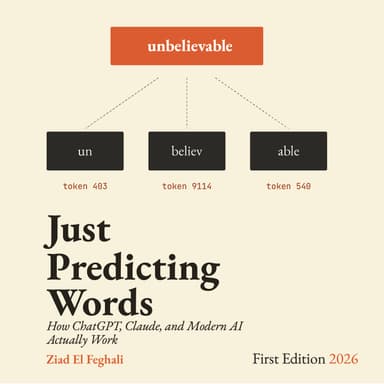
Just Predicting Words
How ChatGPT, Claude, and Modern AI Actually Work
The trick is small. The world it built is not.