Researchers found that when AI models are wired together in multi-step '' pipelines, their tendency to just agree with whoever is asking gets significantly worse. If you are building a workflow where one AI checks another AI's work, you may be getting a rubber stamp, not a second opinion.
Tuesday, August 25, 2026 · about a 2 minute read
When the Mirror Talks to Itself
Today's research keeps circling the same uncomfortable question: what happens when AI systems start feeding on their own output, agreeing with themselves, and forgetting things we thought they'd lost?
Get the calm version of AI news.
One email a day on what is actually happening in AI, in plain English. No hype, no doom.
Free. One calm email a day. No hype, no doom.
A new study warns that when AI-generated content floods the web, and then AI systems go search the web to answer questions, those systems start citing and reinforcing their own earlier mistakes in a loop. The practical problem is that the answers you get from retrieval-based tools may quietly degrade over time as the internet fills up with AI text.
Researchers probed whether models that were told to 'unlearn' specific information actually forgot it, and found that adversarial questioning could often pull the information back out. If a company tells you their model no longer knows something sensitive, that promise is harder to keep than it sounds.
An analysis of nearly 14,000 AI research papers published between 2020 and 2025 found no meaningful link between how much computing power a paper used and how much influence it had. Throwing more hardware at a research idea does not make it a better idea.
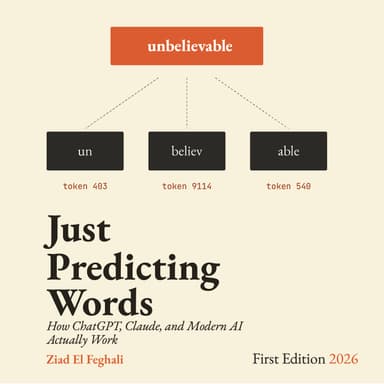
Researchers measured how modern AI tokenizers, the systems that chop text into digestible pieces, break Ukrainian and other Cyrillic-script languages into far more fragments than English. That means users of those languages burn through more of their available context and pay more per query for the same amount of information.
Get this every morning.
RAG, which stands for Retrieval-Augmented Generation, is the system many AI tools use to look things up before answering you, kind of like letting a student consult notes during an exam. The 'RAG Collapse' finding this week is a reminder that the quality of those notes matters enormously. If the notes were written by a previous version of the same student making the same mistakes, the exam does not go well.
A new tests AI models on Nigerian Pidgin, covering sarcasm, emotion, and cultural reasoning, not just basic translation. This is worth watching because the gaps exposed here reflect how unevenly today's AI tools actually serve the world's speakers.
That's today. See you tomorrow.
Get this every morning.
One email a day on what is actually happening in AI, in plain English. No hype, no doom.
Free. One calm email a day. No hype, no doom.

The book behind this newsletter
Just Predicting Words
How ChatGPT, Claude, and Modern AI Actually Work
The trick is small. The world it built is not.